
Graham County's Owner Record Now
The Graham County Appraiser gathers ownership, location, sales, measurements, construction, and income data for valuation. Its ORKA link is the public route from an address or map point to a parcel. Read the field labels on the result itself, since the office publishes no complete field inventory for public reference.
| Owner name | The person, trust, estate, or entity carried on the roll |
|---|---|
| Mailing address | The destination for owner tax notices |
| Situs address | The physical location of the parcel, when assigned |
| Legal description | The lot, block, addition, or rural tract wording |
| Sale data | Transfer information collected for valuation, when shown |
| Parcel key | The identifier used to keep the same tract in view |
The owner of record is the party named in an official record. That is not always the occupant. Owners may receive tax notices at an address outside Graham County. So keep the situs address and the mailing address separate throughout any property search.
How Fresh Is Graham Ownership
The Appraiser values property as of January 1, and Kansas sales data is processed on a recurring schedule. No official Graham source states an exact closing-to-roll update interval. That gap matters after a recent sale: the owner field can trail the instrument that was just recorded.
The strongest current check is therefore chronological. Note the roll name, ask the Register of Deeds for the latest deed affecting the same legal description, and compare the recording date. A deed's grantee is the person or entity receiving the interest. Recording does not replace a title opinion, but it is the best official confirmation of a new transfer.
Note: Graham County publishes no verified promise that the assessment roll changes immediately after closing.
Entity Owners in Graham County
An owner of record may be an LLC, corporation, trust, or estate. It may not be a person at all. Copy the entity name exactly, punctuation and suffixes included. For Kansas businesses, the Secretary of State Business Entity Search accepts entity names. It also accepts identification numbers. It helps distinguish entities and surfaces public filing details, but it cannot turn an entity-owned parcel into personal ownership.
A trust or estate caption often requires the recorded deed. It may also require the probate case or a later transfer. Never infer beneficiaries from a mailing address. The public tax roll says who is listed. The deed records and court record explain how that interest got there.
Confirm Graham County's Current Owner
Two custodians serve two purposes. ORKA and the Appraiser give you the searchable tax-roll identity. The Graham County Register of Deeds holds the deed that transferred the recorded interest, though its official page offers no public web deed index or online cutoff year for a parcel search.
- Search the address or map location through Graham County ORKA.
- Copy the parcel key and exact legal description with the owner name.
- Ask the Register for the newest deed indexed to that tract and compare dates.
- If the grantee is an entity, search its exact name in the Kansas business record.
- Owner of record
- The party currently named in the official roll or deed record.
- Assessment roll
- The county property list used for appraisal and taxation.
- Situs address
- The physical parcel address, distinct from owner mail.
- Recording lag
- Time between a transaction and its appearance in another public system.
Graham's Recent Deed Wins
A recent deed's recording date is the key check. The annual owner roll can look stale otherwise. The Graham County Register of Deeds records deeds, mortgages, plats, liens, powers of attorney, and oil and gas leases at the Hill City office. The office itself warns that recorders are not title researchers.
Bring the exact legal description to the counter. Ask for the newest deed rather than a broad name search. One name can attach to several tracts. Competing deeds, probate events, or a trust raise title questions. A title company, abstract office, or attorney must untangle those.
Protected Graham Owner Information
Kansas public access has limits. Safe at Home gives qualifying victims substitute addresses and mail forwarding. So a public record may not reveal a protected residence. KORA also carries exemptions and rules for requests involving lists of names and addresses.
A missing personal address does not mean the record is incomplete. Use the public custodian path and respect withheld data. The aim is to verify the parcel's owner of record. Never try to defeat a lawful privacy program.
Graham Owner Access Channels
Online access begins at the Graham ORKA entry. If the map fails, contact the Appraiser with an address or legal tract. For the current deed, contact or visit the Register of Deeds. A written KORA request can seek a described nonexempt record. The custodian sets any fees.
Keep these channels separate. The Appraiser explains the tax roll. The Register supplies recorded instruments. The district court handles quiet-title, lien, and foreclosure cases. No single Graham database blends them all.
Read the Latest Graham Deed
Match the newest Graham County deed by land, not by party name. Read the recorded copy closely. It lists the legal description, grantor, grantee, and recording date. It also gives the deed type and the book, page, or instrument reference the office supplies. A warranty deed and a quitclaim deed both transfer an interest. Neither label settles whether another claim exists. Mortgages, releases, liens, probate filings, and court orders can also affect the property. None of them visibly changes the assessor's owner label.
The Register publishes general recording requirements. A deed needs a legal description, signatures, notarization, and the required fee. A Sales Validation Questionnaire is also needed when one applies. Those filing rules explain why the recorded copy outweighs an informal statement as a current-owner source. The Register still does not guarantee the grantor's title.
Suppose the latest deed and the tax roll disagree. Keep both dates. Ask each custodian about its own record. The deed may reflect a newly recorded transfer. The assessment roll follows the annual valuation cycle. A court case, estate, correction deed, or entity conversion can explain the difference too. Never pick the name that is convenient. When the conflict touches a purchase, boundary, inheritance, or legal claim, professional title work is the next step.
Graham Current Owner Field Checks
Read a parcel result as one coherent record. The situs, legal description, parcel key, class, owner name, and mailing address should describe the same land. A blank situs is not a mailing address. Copy an abbreviated owner name exactly before searching a deed or business filing. One wrong assumption can attach the right owner to the wrong parcel.
City legal descriptions usually need lot, block, and addition. Hill City parcels sit in additions such as Fairview, McGill's, Miles, and Hillcrest, while Morland land often carries the Original Town of Fremont wording. Rural tracts instead call for section, township, range, and tract detail. These phrases are the identity of the land. Match them to the newest deed.
Owner records often show a mailing city far from the situs. That is ordinary. An absentee owner, entity office, fiduciary, or tax-mail preference explains it. It says nothing about who is present at the property. Use the public mailing channel only for a legitimate parcel matter. Never publish or combine personal data beyond that purpose.
After a split or combination, compare legal descriptions. A deed for the parent tract may not establish the current owner of every resulting parcel without later instruments. ORKA geometry can point to the change. A recorded plat or deed supplies the legal trail. Ask the Appraiser how the tax parcel was created and the Register which instruments affect it.
Graham Recording Alerts Add Notice
The Graham County Register of Deeds runs a recording-notification service. It alerts an enrolled owner when matching material is recorded. It is a monitoring aid only. It does not guarantee title or block any recording. An unexpected alert should lead to a copy request keyed to the recording reference and legal description.
Confirm the instrument affects the same parcel before acting. Same-name parties and unrelated parcels invite confusion. The county alert complements a manual current-owner check by flagging new activity after the last search, but the deed itself remains the record to inspect.
Use Graham Owner Records Lawfully
A public mailing address can support a parcel-related letter, purchase inquiry, boundary question, or estate matter. It is not proof of residence. Keep the message tied to the property. Honor any substitute address. For a broader address-to-owner method, see who owns a Graham County property, and remember that a title decision needs more than an owner field.
Rolls can lag. The newest recorded deed may be more current than the Graham County assessment roll after a sale. Never use owner data to harass or harm anyone.
Start the current-owner check at the official Graham County Appraiser page, which links the county's public parcel search. That search is the right first source.
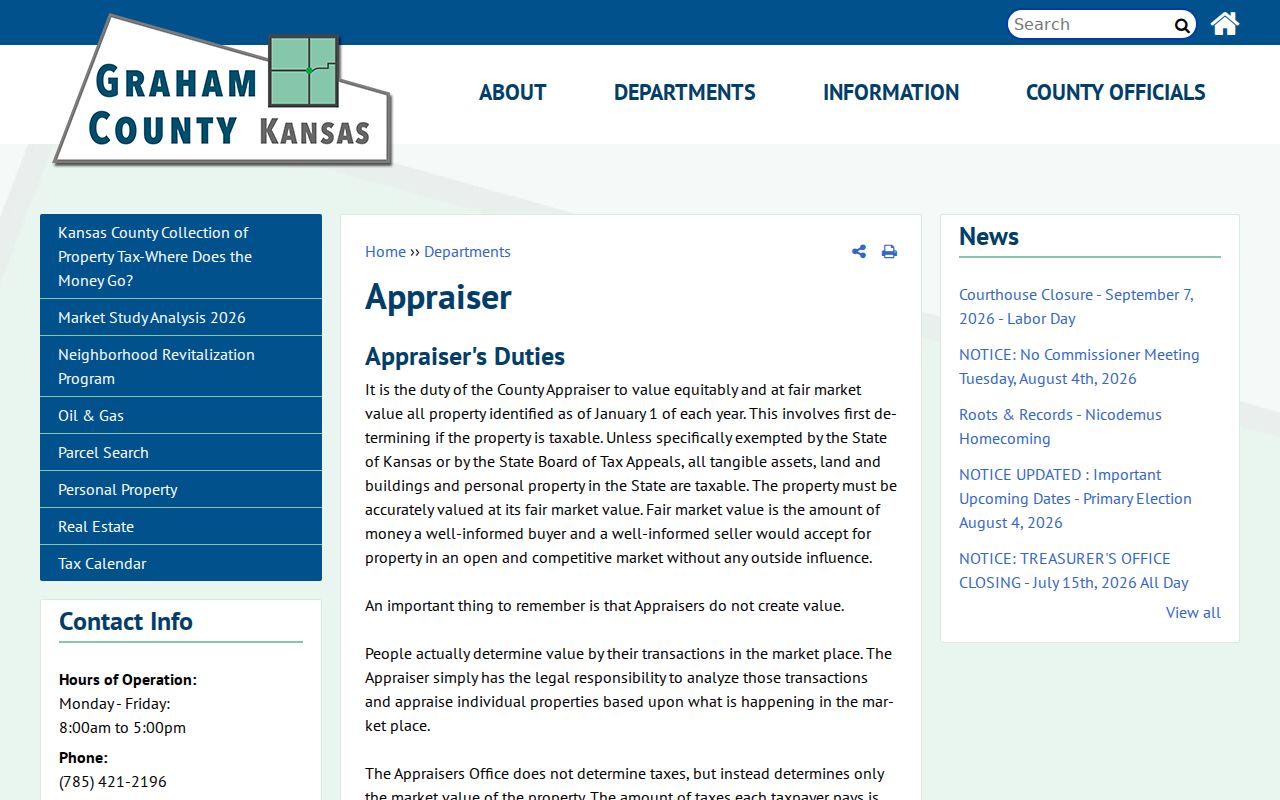
This county screen points to the correct source. After a recent transfer, the latest deed remains the key confirmation of the owner of record.